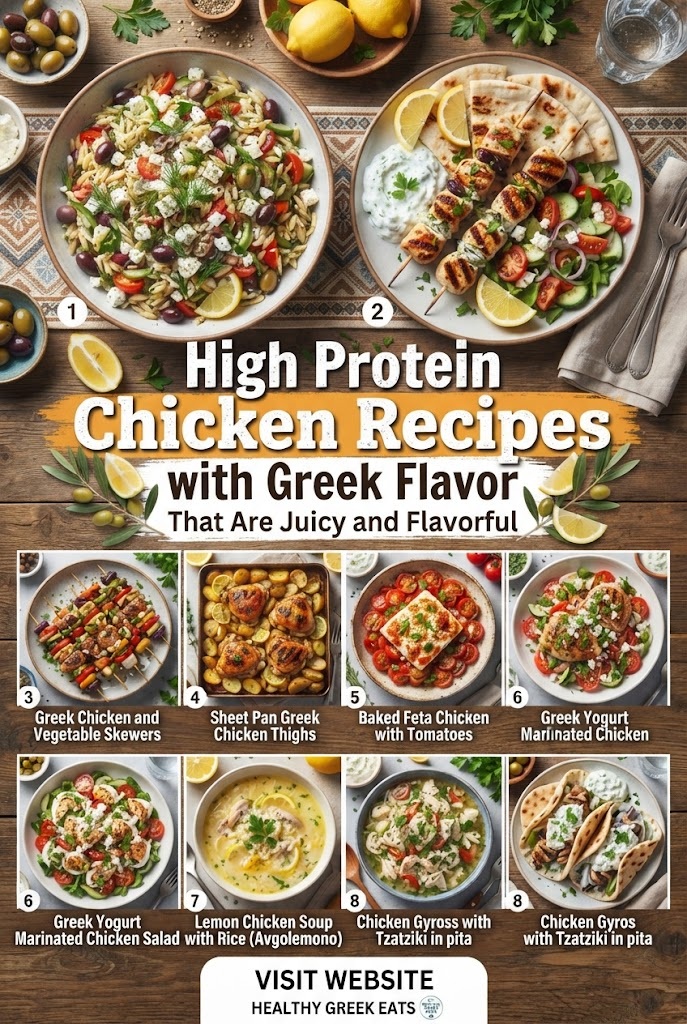
Greek cuisine is celebrated globally for its simplicity, freshness, and vibrant flavor profiles. When it involves protein, particularly chicken, the Mediterranean approach focuses on three core pillars: acid, herbs, and healthy fats. For those on a high-protein diet—whether you are a fitness enthusiast, an athlete, or someone looking to maintain a healthy weight—chicken is the ultimate canvas. However, the biggest complaint about high-protein chicken breast is its tendency to become dry and rubbery.
In this comprehensive guide, we will explore the science of Greek marination, the art of the sear, and five distinct high-protein recipes that transform the humble chicken into a succulent, flavorful masterpiece.
The Philosophy of Greek Flavor and Protein
Greek cooking doesn’t rely on heavy sauces or processed sugars. Instead, it utilizes the “Holy Trinity” of the Mediterranean: Extra Virgin Olive Oil, Lemon, and Oregano. When these elements interact with chicken, a chemical transformation occurs. The acid in the lemon juice breaks down tough muscle fibers, while the olive oil acts as a delivery system for fat-soluble vitamins and aromatics like garlic.
To ensure your chicken remains “juicy and flavorful,” we must prioritize moisture retention. This is achieved through two main methods:
- Enzymatic Tenderization: Using Greek yogurt or lemon juice to soften the proteins.
- Temperature Control: Ensuring the chicken never exceeds an internal temperature of 165°F (74°C).
Recipe 1: The Classic Souvlaki-Style Grilled Chicken Skewers
Souvlaki is the quintessential Greek fast food, but when made at home, it is a nutritional powerhouse. By cutting the chicken into specific shapes, we increase the surface area for the marinade to penetrate.
Ingredient Details in Form/Shape
| Ingredient | Amount | Form/Shape |
|---|---|---|
| Chicken Breast | 2 lbs | 1.5-inch uniform cubes |
| Extra Virgin Olive Oil | 1/2 cup | Liquid |
| Fresh Lemon Juice | 2 large lemons | Squeezed/Liquid |
| Garlic Cloves | 6 cloves | Finely minced/Paste |
| Dried Oregano (Greek) | 2 tbsp | Crushed flakes |
| Salt | 1.5 tsp | Fine grain |
| Black Pepper | 1 tsp | Coarsely ground |
| Red Bell Pepper | 2 large | 1.5-inch squares |
| Red Onion | 1 large | Thick petals/wedges |
| Wooden or Metal Skewers | 10-12 | Long rods |
Step-by-Step Recipe Detail
- Prepare the Chicken: Ensure the chicken breasts are patted dry with paper towels. Cut them into 1.5-inch cubes. Uniformity is key here; if the pieces are different sizes, some will dry out while others remain undercooked.
- Whisk the Marinade: In a large glass bowl, combine the olive oil, lemon juice, minced garlic, oregano, salt, and pepper. Whisk vigorously until the oil and lemon juice are emulsified.
- The Marination Phase: Add the chicken cubes to the bowl. Ensure every piece is coated. Cover and refrigerate for at least 30 minutes, though 2 hours is ideal. Pro tip: Do not marinate in lemon juice for more than 4 hours, or the acid will begin to “cook” the meat, turning it mushy.
- Assemble the Skewers: If using wooden skewers, soak them in water for 30 minutes prior to use to prevent burning. Thread the chicken onto the skewers, alternating with a piece of red onion and red bell pepper. This not only adds flavor but creates “spacers” that allow heat to circulate.
- The High-Heat Sear: Preheat your grill or cast-iron griddle to medium-high heat. Lightly oil the grates. Place the skewers down and let them sear undisturbed for 4-5 minutes.
- The Turn: Flip the skewers. You should see charred edges and golden-brown surfaces. Cook for another 4-5 minutes.
- Resting: Remove from heat and place on a warm platter. Tent loosely with foil and let the chicken rest for 5 minutes. This allows the juices to redistribute through the muscle fibers.
Recipe 2: Greek Yogurt Marinated “Melt-in-Your-Mouth” Chicken Thighs
If you struggle with dry chicken, Greek yogurt is your best friend. The lactic acid in yogurt tenderizes more gently than lemon juice, and the fat content creates a protective barrier.
Ingredient Details in Form/Shape
| Ingredient | Amount | Form/Shape |
|---|---|---|
| Boneless Skinless Thighs | 2 lbs | Whole, trimmed of excess fat |
| Plain Greek Yogurt (0% or 2%) | 1 cup | Thick cream |
| Smoked Paprika | 1 tsp | Fine powder |
| Fresh Dill | 3 tbsp | Finely chopped |
| Fresh Parsley | 2 tbsp | Finely chopped |
| Lemon Zest | 1 lemon | Fine shavings |
| Ground Cumin | 1/2 tsp | Powder |
| Kosher Salt | 1 tsp | Coarse flakes |
Step-by-Step Recipe Detail
- The Tenderizing Base: In a medium bowl, mix the Greek yogurt, paprika, cumin, lemon zest, and half of the fresh herbs. The yogurt acts as a “thick blanket” for the chicken.
- Coating: Toss the chicken thighs in the yogurt mixture. Use your hands to ensure the marinade gets into every fold of the meat.
- Chilling: Cover and refrigerate for 4 to 12 hours. The yogurt enzymes work slowly, making this a perfect overnight marinade.
- Oven Roasting: Preheat your oven to 425°F (220°C). Arrange the thighs on a wire rack set over a baking sheet. The rack allows hot air to flow under the meat, preventing it from boiling in its own juices.
- Baking: Roast for 20-25 minutes. Because thighs have more connective tissue and fat, they are much more forgiving than breasts.
- Broil Finish: Turn the oven to “Broil” for the last 2-3 minutes. This will caramelize the yogurt coating, creating delicious brown spots known as the Maillard reaction.
- Garnish: Sprinkle the remaining fresh dill and parsley over the hot chicken before serving.
Recipe 3: Spinach and Feta Stuffed Mediterranean Chicken Breast
This recipe is designed for those who want a “gourmet” feel while packing in maximum protein and micronutrients. The stuffing keeps the inside of the breast moist from the internal out.
Ingredient Details in Form/Shape
| Ingredient | Amount | Form/Shape |
|---|---|---|
| Large Chicken Breasts | 4 units | Butterfly-cut / Pocketed |
| Fresh Baby Spinach | 4 cups | Wilted and squeezed dry |
| Feta Cheese | 1/2 cup | Crumbled |
| Sun-dried Tomatoes | 1/4 cup | Thinly sliced strips |
| Garlic Powder | 1 tsp | Fine dust |
| Onion Powder | 1 tsp | Fine dust |
| Toothpicks | 8-12 | Sharp wooden pins |
| Olive Oil | 2 tbsp | Liquid |
Step-by-Step Recipe Detail
- Creating the Pocket: Lay the chicken breast flat. Using a sharp paring knife, slice horizontally into the thickest part of the breast to create a pocket. Be careful not to cut all the way through.
- Preparing the Filling: Sauté the spinach in a pan until wilted. Place the wilted spinach in a clean kitchen towel and squeeze out every drop of excess moisture. This is crucial—if the spinach is wet, the chicken will steam and become rubbery.
- Mixing: In a small bowl, combine the squeezed spinach, crumbled feta, and sun-dried tomatoes.
- Stuffing: Spoon 2-3 tablespoons of the mixture into each chicken pocket. Do not overstuff, or the chicken won’t cook evenly.
- Sealing: Use toothpicks to “stitch” the opening closed. Season the outside of the chicken with garlic powder, onion powder, salt, and pepper.
- The Sear-to-Bake Method: Heat olive oil in an oven-safe skillet over medium-high heat. Sear the chicken for 3 minutes per side until golden.
- Finishing: Transfer the entire skillet to a preheated oven at 375°F (190°C) for 10-12 minutes.
- Resting: Let the meat rest for 5 minutes before removing the toothpicks and slicing. The melted feta creates a creamy “sauce” inside the meat.
Recipe 4: Lemon-Garlic Sheet Pan Chicken with Kalamata Olives
Sheet pan meals are the king of high-protein meal prep. The combination of chicken and roasted vegetables creates a complete nutritional profile with minimal cleanup.
Ingredient Details in Form/Shape
| Ingredient | Amount | Form/Shape |
|---|---|---|
| Chicken Tenderloins | 1.5 lbs | Long strips |
| Zucchini | 2 medium | Half-moon slices |
| Cherry Tomatoes | 1 pint | Whole |
| Kalamata Olives | 1/2 cup | Pitted and halved |
| Red Onion | 1 large | Sliced into half-rings |
| Dried Thyme | 1 tsp | Dried leaves |
| Fresh Rosemary | 1 sprig | Finely minced |
| Balsamic Vinegar | 1 tbsp | Liquid |
Step-by-Step Recipe Detail
- Vegetable Foundation: On a large rimmed baking sheet, toss the zucchini, cherry tomatoes, olives, and red onions.
- Protein Integration: Place the chicken tenderloins among the vegetables. Tenderloins are naturally more tender than the whole breast and cook very quickly.
- Drizzling: In a small jar, shake together olive oil, balsamic vinegar, minced rosemary, thyme, and salt. Pour this over the entire sheet pan.
- Tossing: Use your hands to toss everything together so the vegetables and chicken are evenly glazed.
- Roasting: Bake at 400°F (200°C) for 18-20 minutes. At the halfway mark, give the pan a shake to ensure the tomatoes are bursting and the zucchini is browning.
- The “Burst” Test: The recipe is done when the cherry tomatoes have shriveled and released their juices, creating a natural sauce that coats the chicken.
- Final Touch: A squeeze of fresh lemon over the hot pan adds a bright acidity that cuts through the richness of the olives.
Recipe 5: Slow-Cooker Greek Pulled Chicken (For Gyro Bowls)
For those who need a “set it and forget it” high-protein option, this slow-cooked method ensures the chicken is so moist it literally falls apart.
Ingredient Details in Form/Shape
| Ingredient | Amount | Form/Shape |
|---|---|---|
| Chicken Breast | 3 lbs | Whole |
| Chicken Broth (Low Sodium) | 1/2 cup | Liquid |
| Red Wine Vinegar | 1/4 cup | Liquid |
| Garlic | 8 cloves | Smashed |
| Dried Oregano | 2 tbsp | Flakes |
| Bay Leaves | 2 units | Whole dried leaves |
| Ground Cinnamon | 1 pinch | Powder (The secret Greek touch) |
Step-by-Step Recipe Detail
- Layering: Place the whole chicken breasts in the bottom of the slow cooker.
- Aromatics: Scatter the smashed garlic cloves, bay leaves, and oregano over the meat. Add a tiny pinch of cinnamon—this is a traditional Greek secret that adds depth without making it taste like dessert.
- Liquids: Pour the chicken broth and red wine vinegar around the sides of the chicken.
- The Slow Cook: Set the cooker to “Low” for 4-5 hours. Avoid the “High” setting if possible, as high heat can tighten the proteins too quickly, leading to stringy meat.
- Shredding: Once the chicken is tender enough to break with a fork, remove it from the slow cooker and place it in a large bowl. Use two forks to shred the meat into long, thin strands.
- The Reduction: Take 1/2 cup of the liquid remaining in the slow cooker and mix it back into the shredded chicken. This ensures the meat stays juicy even if you reheat it the next day.
- Serving: Serve in a bowl over cauliflower rice or quinoa, topped with cucumber, tomato, and a dollop of Tzatziki.
The Science of Juiciness: Why These Methods Work
To truly master high-protein chicken, one must understand the biological structure of the bird. Chicken breast is composed of long, lean muscle fibers with very little intramuscular fat. When heat is applied, these fibers contract and squeeze out water.
1. The Role of Salt (Dry Brining)
Salt is the only ingredient that can deeply penetrate the protein structure. When you salt your Greek chicken at least 30 minutes before cooking, it breaks down the protein “myosin.” This allows the muscle fibers to hold onto more water during the cooking process.
2. Acid vs. Time
While lemon juice is a staple of Greek flavor, it is a double-edged sword. Acid denatures protein. If left too long, it turns the surface of the chicken into a mushy texture. For the recipes above, always stick to the recommended marination times. If you need more lemon flavor but want to marinate overnight, use lemon zest instead of juice. The zest contains the essential oils (flavor) without the acid (texture-changer).
3. The Carry-over Cooking Effect
Chicken continues to cook after it is removed from the heat source. If you pull chicken off the grill at 165°F, it will likely rise to 170°F or 175°F while resting, resulting in dry meat. Professional chefs often pull chicken at 160°F and let it rest for 5-8 minutes under foil to reach the safe 165°F mark naturally.
Essential Greek Sides to Boost Protein
A meal is only as good as its accompaniments. To keep these recipes high-protein and healthy, pair them with these traditional Greek sides:
Homemade High-Protein Tzatziki
Instead of store-bought versions which are often watered down, make a high-protein version using:
- 2 cups of 0% Greek Yogurt (Strained)
- 1 large English Cucumber (Grated and squeezed dry)
- 4 cloves of Garlic (Mashed)
- 1 tbsp Fresh Dill
- 1 tsp Lemon Juice This sauce adds roughly 15-20g of protein per cup, making it a functional part of the meal rather than just a garnish.
The Village Salad (Horiatiki)
A true Greek salad has no lettuce. It consists of:
- Chunks of Tomato
- Cucumber Slices
- Green Bell Peppers
- Red Onions
- Kalamata Olives
- A slab of Feta Cheese The healthy fats from the feta and olives aid in the absorption of the vitamins found in the chicken and vegetables.
Meal Prep Strategies for the Busy Professional
One of the challenges of a high-protein lifestyle is the time required for cooking. Greek chicken is uniquely suited for meal prep because its flavors actually improve as they sit.
The “Marinate and Freeze” Method
You can prepare the marinades for all five recipes above and place the raw chicken and marinade into freezer bags.
- Label the bags with the recipe name and date.
- As the chicken thaws in the fridge overnight, it undergoes the marination process.
- This cuts your “active” kitchen time down to just the cooking phase.
Reheating Without Drying Out
To reheat your Greek chicken while maintaining its juiciness:
- Avoid the Microwave if possible. It vibrates water molecules, causing them to escape as steam, leaving the meat dry.
- The “Splash” Method: If you must use a microwave, add a splash of chicken broth or water to the container and cover it with a damp paper towel.
- The Cold Option: Greek chicken is one of the few proteins that tastes excellent cold. Slice the Souvlaki or the Yogurt-Marinated thighs and toss them directly onto a cold salad.
Nutritional Breakdown and Benefits
The Mediterranean diet, specifically this high-protein chicken approach, offers several health benefits:
- Satiety: High protein intake increases the production of satiety hormones like GLP-1 and PYY, while reducing levels of the hunger hormone ghrelin.
- Thermogenesis: Protein has a higher thermic effect of food (TEF) than fats or carbs, meaning your body burns more calories just digesting it.
- Heart Health: By using Extra Virgin Olive Oil (monounsaturated fats) instead of butter or seed oils, you support cardiovascular health and reduce inflammation.
- Muscle Retention: Consuming 30-50g of protein per meal (roughly 6-8 oz of chicken) provides the necessary leucine to trigger muscle protein synthesis.
Advanced Flavor Tips: The “Finishing Touch”
To take your Greek chicken from “good” to “restaurant quality,” consider these final adjustments:
- Dried vs. Fresh Oregano: In Greek cooking, dried oregano is often preferred for meat because it has a more concentrated, earthy flavor that stands up to high heat. Fresh oregano can become bitter when charred.
- The “Final Squeeze”: Always keep a fresh lemon wedge on the side of your plate. A hit of fresh acidity right before the chicken hits your tongue awakens the taste buds and enhances the perception of salt.
- High-Quality Olive Oil: Since olive oil is a primary flavor component, use “Cold Pressed” Extra Virgin Olive Oil. It should have a slightly peppery finish at the back of your throat—this indicates a high concentration of polyphenols (antioxidants).
Conclusion: Embracing the Mediterranean Lifestyle
High-protein eating doesn’t have to be a chore of bland, boiled chicken and steamed broccoli. By adopting the Greek philosophy of cooking, you turn every meal into a celebration of fresh ingredients and bold flavors. Whether you are searing skewers on a weeknight or slow-cooking a large batch for the week ahead, the keys remain the same: Quality ingredients, proper marination, and careful temperature control.
By following these recipes and techniques, you will ensure that your chicken is always the star of the table—bursting with juice, packed with protein, and vibrating with the timeless flavors of the Mediterranean. Now, grab your lemons, your garlic, and your oregano, and transform your kitchen into a Greek taverna. Your muscles—and your taste buds—will thank you.
