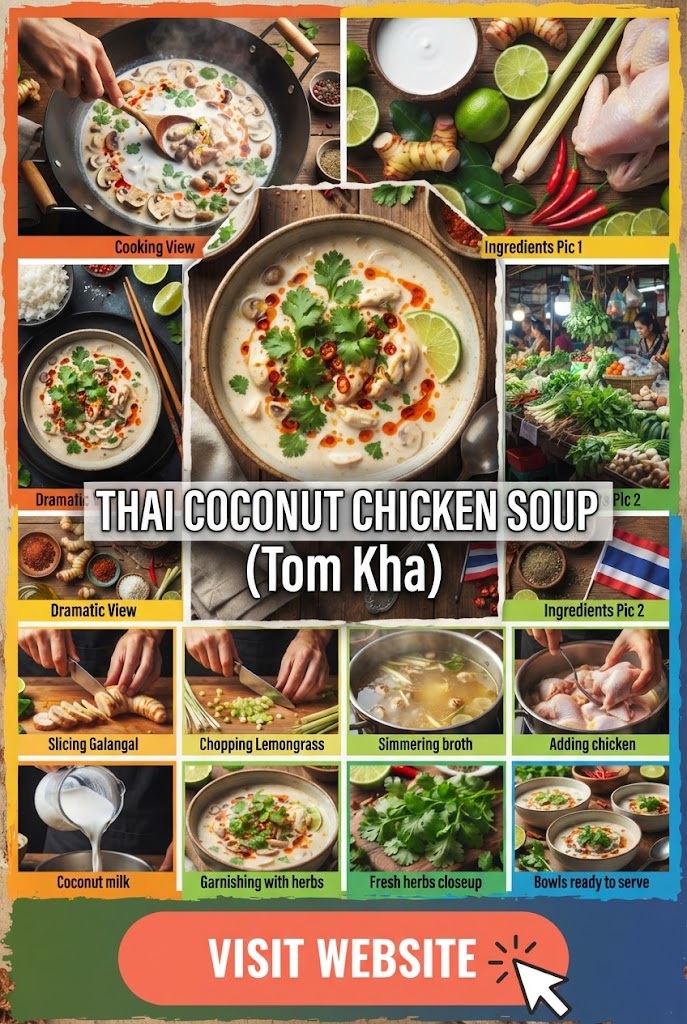
Walk into any professional kitchen in Bangkok, and before the burners are even lit, the air is thick with a specific, sharp, and citrusy perfume. It is the scent of galangal hitting the heat, the bruised fibers of lemongrass releasing their essential oils, and the citrus-heavy punch of crushed makrut lime leaves. To the uninitiated, it’s just a soup. To a chef, Tom Kha Gai is a high-wire balancing act of four distinct pillars: salt, sour, sweet, and spice.
In the Western culinary world, we are often taught that creaminess comes from dairy—heavy creams, butter monté, or slow-reduced milk. In the Southeast Asian pantry, however, the coconut is king. But this isn’t the sugary coconut flavor of a dessert; it is a rich, fatty, and deeply savory medium that carries the volatile oils of Thai aromatics better than water ever could.
This guide is designed to take you beyond the “dump and simmer” method. We are going to explore the structural integrity of a perfect Tom Kha, focusing on the quality of ingredients, the precision of the extraction, and the delicate emulsification that prevents your coconut milk from breaking. Whether you are a seasoned home cook or a culinary student, understanding the chemistry behind this soup is the key to moving from a “good” dish to a transformative one.
The Pillars of Flavor: Understanding Your Aromatics
Before we touch a knife, we must talk about the “Holy Trinity” of Tom Kha. Without these three specific ingredients, you aren’t making Tom Kha; you’re just making chicken soup with coconut milk.
1. Galangal (Kha)
The name “Tom Kha” literally translates to “boiled galangal.” While it looks like ginger, do not be fooled. Ginger is spicy and pungent; galangal is piney, citrusy, and almost medicinal. It is much harder than ginger and cannot be easily grated. In a professional kitchen, we slice it into thin coins to maximize the surface area for infusion. If you replace galangal with ginger, the soul of the dish is lost.
2. Lemongrass (Takhrai)
Lemongrass provides the high-note citrus aroma. The mistake most novices make is using the whole stalk. In reality, the flavor is concentrated in the bottom third—the pale, bulbous end. We discard the woody tops (or save them for stock) and focus on the tender heart. Crucially, we “bruise” the lemongrass with the back of a knife to rupture the cells before adding it to the pot.
3. Makrut Lime Leaves (Bai Makrut)
Often mislabeled as “kaffir” lime leaves in older cookbooks, these double-lobed leaves are the backbone of Thai aromatics. They carry a floral, intense lime scent that no zest or juice can replicate. We tear them by hand, removing the central rib, to release the fragrance immediately upon contact with the simmering liquid.
Ingredient Tips for the Discerning Cook
To achieve a restaurant-quality result, the quality of your pantry items is non-negotiable.
- Coconut Milk: Look for a brand with a high fat content (at least 17-19g of fat per serving). Avoid “lite” coconut milk at all costs—it lacks the viscosity needed to coat the back of a spoon. Brands like Aroy-D or Chaokoh, typically found in paper UHT cartons, offer a more consistent, creamy texture than canned varieties which can sometimes have a metallic aftertaste.
- Fish Sauce (Nam Pla): This is your primary salt source. A high-quality fish sauce should have only three ingredients: anchovies, sea salt, and water. Avoid brands that include sugar or MSG as fillers. The saltiness should be sharp but clean.
- The Chicken: I strongly recommend skinless, boneless chicken thighs. Breast meat tends to overcook and become stringy in the time it takes to properly infuse the broth. Thighs stay succulent and provide a better mouthfeel.
- The Mushrooms: Authentically, straw mushrooms are used. If you can’t find them fresh or canned, oyster mushrooms are the best substitute due to their delicate texture and ability to absorb the broth. Cremini mushrooms work in a pinch but can turn the broth a muddy color if simmered too long.
- Palm Sugar: While white sugar provides sweetness, palm sugar adds a caramel-like depth that rounds out the acidity of the lime juice. It’s usually sold in hard disks; shave it with a knife before measuring.
Professional Kitchen Equipment
You don’t need a high-tech lab, but a few specific tools will make the process more efficient:
- A Heavy-Bottomed Stockpot or Dutch Oven: This ensures even heat distribution and prevents the coconut milk from scorching at the bottom of the pan.
- A Sharp Mandoline or Chef’s Knife: Necessary for slicing the fibrous galangal into thin, translucent discs.
- A Fine-Mesh Spider or Slotted Spoon: Essential for removing the woody aromatics before serving if you prefer a “clean” bowl, though many traditionalists leave them in for aesthetic and aromatic purposes.
- Mortar and Pouch: Ideally granite. You’ll use this to lightly crush your bird’s eye chilies. You don’t want a paste; you want to “open” the chili so the heat can seep into the broth.
The Recipe: Step-by-Step Culinary Process
This process is designed to build layers of flavor. We aren’t just boiling everything together; we are extracting aromatics, poaching the protein, and finishing with fresh acidity.
Phase 1: The Infusion (The Base)
- In your pot, combine 2 cups of high-quality chicken stock with 1.5 cups of coconut milk.
- Bring this to a gentle simmer over medium heat. Do not let it reach a rolling boil, as this can cause the coconut fat to separate from the liquid.
- Add 2 ounces of thinly sliced galangal, 2 stalks of bruised lemongrass (cut into 2-inch segments), and 5 torn makrut lime leaves.
- Let this steep for at least 10 to 12 minutes. The liquid should change color slightly and smell intensely fragrant.
Phase 2: Building the Body
- Add 1 pound of chicken thigh meat, cut into bite-sized (1-inch) pieces.
- Add your mushrooms (about 8 ounces).
- Stir in 2 tablespoons of fish sauce and 1 tablespoon of shaved palm sugar.
- Lightly crush 3 to 5 Thai bird’s eye chilies and drop them in. If you prefer a milder soup, leave them whole; for high heat, slice them.
- Maintain a gentle simmer until the chicken is just cooked through—usually about 5 to 7 minutes. The mushrooms should be tender but still hold their shape.
Phase 3: The Finish (The “Golden Balance”)
- This is the most critical step. Turn off the heat entirely.
- Add another 1/2 cup of fresh coconut milk. This “cold” addition at the end restores the bright white color and ensures a creamy finish.
- Slowly stir in 3 to 4 tablespoons of fresh lime juice. Note: Never boil lime juice. High heat turns the citric acid bitter.
- Taste the broth. It should be a perfect harmony of creamy-sweet, salty-umami, and sharp-citrus. If it feels flat, add more fish sauce. If it’s too sharp, add a pinch more sugar.
Chef’s Secrets for Presentation
In a professional setting, we eat with our eyes first. A bowl of Tom Kha should look as vibrant as it tastes.
- Chili Oil Drizzle: For that classic restaurant look, add a few drops of Thai chili oil (Nam Prik Pao) on top just before serving. The red oil creates a stunning contrast against the snowy white broth.
- The Herb Garnish: Use fresh cilantro leaves and thinly sliced green onions. For a more sophisticated profile, use culantro (sawtooth herb) if you can find it.
- Aromatic Inclusion: While you can strain out the galangal and lemongrass, leaving a few pieces in the bowl signals to the diner that the soup was made with fresh, authentic ingredients. Just remind your guests not to eat the woody stalks!
Common Pitfalls to Avoid
Even experienced chefs can stumble with Thai cuisine if they treat it like Western cooking.
- Boiling the Coconut Milk: I cannot stress this enough. If you boil the broth too vigorously, the coconut milk will “split,” leaving you with a greasy layer of oil on top and a thin, watery liquid below. Keep it at a “lazy bubble.”
- Using Bottled Lime Juice: The volatile oils in fresh lime zest and juice are what provide the “lift” to the soup. Bottled juice is pasteurized and flat; it will make your soup taste like it came from a can.
- Overcooking the Aromatics: If you simmer the lemongrass and galangal for an hour, the flavors become muddy and bitter. Think of it like steeping tea—there is a sweet spot for extraction.
- Substituting Soy Sauce for Fish Sauce: Soy sauce adds an earthy, fermented wheat flavor that clashes with the bright notes of coconut and lime. If you must go vegan, use a specialized vegan fish sauce made from pineapple and seaweed.
Recipe Variations and Substitutions
While “Gai” means chicken, the “Tom Kha” base is incredibly versatile.
- Tom Kha Goong (Shrimp): Replace the chicken with large, peeled and deveined shrimp. Add the shrimp at the very end and cook for only 2-3 minutes until pink.
- Tom Kha Het (Mushroom/Vegetarian): Use a robust vegetable stock and a variety of mushrooms (king oyster, shiitake, and button). Use “no-fish” sauce or extra salt/light soy to compensate for the umami.
- Tom Kha Seafood: A mix of mussels, squid, and firm white fish. This requires a very clean fish stock base to avoid an overly “fishy” aroma.
- The Keto Variation: Tom Kha is naturally very low in carbs. To make it strictly Keto, simply omit the palm sugar or use a tiny amount of monk fruit sweetener. The coconut milk provides plenty of healthy fats.
Storage, Freezing, and Reheating
If you find yourself with leftovers, you must handle them carefully to preserve the texture.
Storage: Store the soup in an airtight glass container in the refrigerator for up to 3 days. The flavors will actually deepen overnight, though the lime juice may lose some of its brightness.
Freezing: I generally advise against freezing Tom Kha. Coconut milk has a tendency to change texture significantly when frozen and thawed, often becoming grainy. If you must freeze it, do so without the chicken and mushrooms, then whisk it vigorously while reheating to re-emulsify the fats.
Reheating: Never use a microwave for this soup if you can avoid it. Reheat it in a small saucepan over low heat. Bring it just to a simmer, then remove it immediately. You may want to add a fresh squeeze of lime juice right before eating to “wake up” the flavors.
Best Side Dishes for a Complete Thai Feast
To turn this soup into a full meal, consider these pairings:
- Jasmine Rice: A side of steamed, fragrant jasmine rice is the traditional accompaniment. You can either pour the soup over the rice or dip spoonfuls of rice into the broth.
- Thai Green Papaya Salad (Som Tum): The crunchy, spicy, and extremely acidic salad provides a brilliant counterpoint to the rich, creamy coconut broth.
- Chicken Satay: The charred, grilled flavors of satay skewers complement the poached texture of the chicken in the soup.
- Thai Fish Cakes (Tod Mun Pla): These chewy, spiced cakes offer a different protein texture that rounds out the dining experience.
Nutrition Information (Per Serving)
Note: These are estimates based on standard ingredients.
- Calories: 320 kcal
- Total Fat: 22g
- Saturated Fat: 18g
- Protein: 18g
- Carbohydrates: 12g
- Fiber: 2g
- Sugar: 6g
- Sodium: 980mg
The high fat content comes primarily from the coconut milk, providing medium-chain triglycerides (MCTs), while the galangal and lemongrass offer various antioxidant properties.
Frequently Asked Questions
Can I use ginger if I absolutely cannot find galangal? As a chef, I have to say no if you want the authentic taste. However, if it’s a “cooking emergency,” use ginger but add a little extra lime zest to try and mimic that citrusy-pine note. Just know the flavor profile will shift significantly toward a “spicier” heat.
Why is my soup a grayish color instead of bright white? This usually happens for two reasons: either you used a low-quality canned coconut milk that contains stabilizers and thickeners, or you overcooked the mushrooms and they bled their color into the broth. To keep it white, use high-quality UHT coconut milk and don’t over-simmer the vegetables.
Is Tom Kha Gai spicy? It is traditionally a “medium” heat soup. Unlike Tom Yum, which is meant to be quite fiery, Tom Kha uses coconut milk to mellow out the spice. You can control the heat entirely by how many bird’s eye chilies you use and whether or not you cut them open.
What if I can’t find makrut lime leaves? There is no perfect substitute, but the best “plan B” is a combination of fresh lime zest and a few bay leaves. It won’t be identical, but it will provide the citrus-floral aroma necessary for the dish’s complexity.
Why does the recipe call for chicken stock AND coconut milk? Using 100% coconut milk makes the soup too heavy and cloying. Using a base of chicken stock thins the consistency to a “slurpable” soup while allowing the coconut flavor to remain the star without being overwhelming.
Is it okay to eat the pieces of lemongrass and galangal in the soup? You certainly can, but they are very woody and fibrous. Most people push them to the side of the bowl. In fine dining Thai restaurants, these are often strained out before serving, but in a home or “street food” setting, they are always left in.
How do I prevent the coconut milk from curdling? Curdling happens when the heat is too high or if the lime juice is added while the soup is boiling. Keep the temperature at a gentle simmer and always add your acid (lime juice) at the very end after the heat is turned off.
Final Thoughts from the Kitchen
Mastering Thai Coconut Chicken Soup is a rite of passage for any cook interested in Southeast Asian cuisine. It teaches you the importance of “tasting as you go.” Unlike baking, where measurements are absolute, Thai cooking is about intuition. Your limes might be more acidic than mine; your fish sauce might be saltier.
The recipe provided here is your roadmap, but your palate is the compass. Don’t be afraid to add that extra splash of fish sauce or another pinch of palm sugar. When you hit that “Golden Balance,” you’ll know. The soup will suddenly “pop,” and the flavors will sing in perfect harmony. Serve it hot, garnish it with intention, and enjoy the complex, comforting soul of Thai home cooking.
