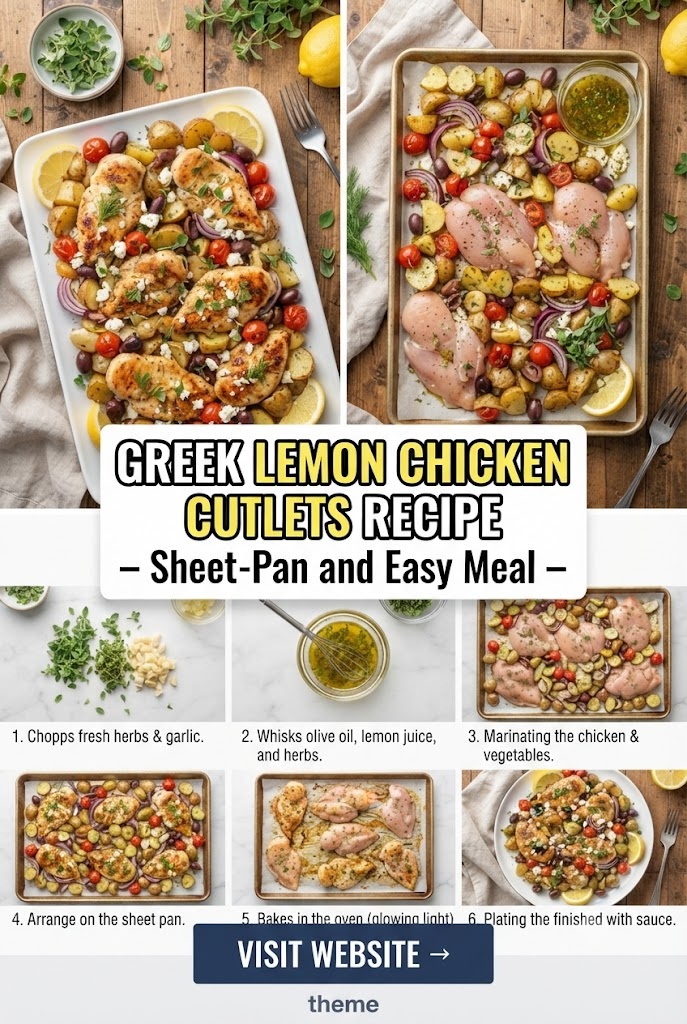
In the pantheon of weeknight dinners, few dishes command as much respect and adoration as the Greek Lemon Chicken Cutlet. It is a dish that marries the rustic, sun-drenched flavors of the Mediterranean with the modern necessity for speed, efficiency, and minimal cleanup. When you think of Greek cuisine, your mind likely drifts to the vibrant acidity of fresh lemons, the earthy fragrance of wild oregano, and the pungent kick of garlic. These ingredients are not just flavorings; they are the soul of the Hellenic kitchen.
This comprehensive guide will walk you through every nuance of creating the perfect Sheet-Pan Greek Lemon Chicken Cutlets. From selecting the finest poultry to mastering the art of the 20-minute roast, we are diving deep into the culinary techniques that turn a simple piece of chicken into a restaurant-quality feast.
Why Chicken Cutlets are the Secret to Weeknight Success
Before we dive into the herbs and spices, we must discuss the “cutlet.” Many home cooks struggle with dry, rubbery chicken breasts because they attempt to roast thick, uneven pieces of meat. By the time the center is cooked through, the exterior is parched.
Chicken cutlets change the game. A cutlet is simply a chicken breast that has been sliced horizontally into thinner fillets and, ideally, pounded to an even thickness. This serves three vital purposes:
- Fast Cooking Time: Thin cutlets cook in a fraction of the time required for a whole breast. On a hot sheet pan, they can reach perfection in 12 to 15 minutes.
- Increased Surface Area: More surface area means more room for that delicious lemon-garlic marinade to cling to, ensuring every bite is packed with flavor.
- Even Doneness: Because the meat is uniform in thickness, you won’t have to deal with the thin tail being overcooked while the thickest part remains raw.
The Anatomy of the Perfect Greek Marinade
The “Lemonato” flavor profile is a cornerstone of Greek cooking. To achieve that signature zest, you need a balanced marinade that hits every part of the palate.
The Acid: Fresh Lemon Juice and Zest
Never use bottled lemon juice. The bottled version lacks the volatile oils found in the skin and the bright, floral acidity of fresh fruit. For this recipe, we use both the juice (for tenderizing and tang) and the zest (for that deep, aromatic citrus punch).
The Fat: Extra Virgin Olive Oil (EVOO)
In Greek cooking, olive oil is treated like liquid gold. Use a high-quality, cold-pressed EVOO. It acts as a vehicle for the fat-soluble flavors in the herbs and helps the chicken achieve a beautiful golden-brown color in the oven.
The Aromatics: Garlic and Oregano
Freshly minced garlic is non-negotiable. As it roasts on the sheet pan, the garlic mellows from a sharp bite to a nutty sweetness. Pair this with dried Greek oregano. Interestingly, dried oregano is often preferred over fresh in this context because it holds up better to the high heat of the oven and provides a more concentrated “earthy” flavor.
The Secret Ingredient: A Touch of Mustard
While not always traditional in every household, adding a teaspoon of Dijon or Greek mustard to the marinade acts as an emulsifier. It helps the oil and lemon juice stay together, creating a thick sauce that coats the chicken instead of sliding off.
Ingredients Checklist: Everything You Need
To make this easy meal, gather the following ingredients. Quality matters, so choose organic or locally sourced options when possible.
For the Chicken:
- Chicken Breasts: 1.5 to 2 lbs, sliced into cutlets.
- Lemons: 3 large (2 for juicing/zesting, 1 for slicing into rounds).
- Garlic: 5-6 cloves, finely minced.
- Extra Virgin Olive Oil: ½ cup.
- Dried Greek Oregano: 2 tablespoons.
- Sea Salt & Cracked Black Pepper: To taste.
- Optional: 1 tsp of honey or maple syrup (to balance the acidity).
For the Sheet-Pan Vegetables:
- Red Onion: 1 large, cut into thick wedges.
- Bell Peppers: 2 (red and yellow), sliced into strips.
- Cherry Tomatoes: 1 pint, left whole so they “burst” in the oven.
- Zucchini: 1 medium, sliced into half-moons.
- Kalamata Olives: ½ cup, pitted.
- Feta Cheese: ½ cup, crumbled (added at the end).
Step-by-Step Instructions for Sheet-Pan Excellence
Phase 1: Preparing the Cutlets
If you didn’t buy pre-sliced cutlets, place your hand flat on top of a boneless, skinless chicken breast. Using a sharp chef’s knife, slice horizontally through the middle. Place the pieces between two sheets of plastic wrap and gently pound them with a meat mallet or a heavy skillet until they are about ½ inch thick.
Phase 2: The Marinating Process
In a large bowl or a zip-top bag, whisk together the olive oil, lemon juice, lemon zest, minced garlic, oregano, salt, pepper, and mustard. Add the chicken cutlets, ensuring every piece is submerged.
Pro Tip: While you can cook these immediately, letting them marinate for 30 minutes to 2 hours in the refrigerator will transform the texture. The acid in the lemon juice begins to break down the protein fibers, resulting in a more tender bite. Do not exceed 4 hours, or the chicken may become mushy.
Phase 3: The Assembly
Preheat your oven to 425°F (220°C). High heat is essential for a sheet-pan meal; it ensures the vegetables roast and caramelize rather than steam.
Line a large rimmed baking sheet with parchment paper or foil for easy cleanup. Toss your vegetables (onions, peppers, zucchini, tomatoes) in a light coating of olive oil, salt, and a pinch of oregano. Spread them out across the pan, leaving space for the chicken.
Place the marinated chicken cutlets nestled among the vegetables. Top the chicken with thin slices of lemon.
Phase 4: The Roast
Slide the pan into the center of the oven. Roast for 15–18 minutes. Around the 10-minute mark, you can toss the vegetables slightly. The chicken is done when the internal temperature reaches 165°F (74°C) and the juices run clear.
Phase 5: The Finish
Remove the pan from the oven. Immediately sprinkle the crumbled feta cheese and Kalamata olives over the hot chicken and vegetables. The residual heat will soften the feta just enough. Garnish with a handful of fresh parsley or dill for a final pop of color and freshness.
The Science of Flavor: Why This Recipe Works
Understanding the “why” behind a recipe helps you become a better instinctive cook. The Greek Lemon Chicken Cutlet relies on several culinary principles:
- Maillard Reaction: By roasting at 425°F, we encourage the Maillard reaction—the chemical reaction between amino acids and reducing sugars that gives browned food its distinctive flavor.
- Acidity and Fat Balance: The richness of the olive oil and the saltiness of the feta are perfectly cut by the sharp lemon juice. This balance prevents the dish from feeling too heavy.
- Aromatic Infusion: Garlic and oregano contain essential oils that are released more effectively when heated with fat (olive oil). This “blooming” of spices ensures the flavor permeates the meat rather than just sitting on top.
Alternative Cooking Methods
While the sheet-pan method is the ultimate “set it and forget it” technique, you might want to try these variations depending on your kitchen setup:
The Cast Iron Skillet Method
If you want a truly crispy, golden crust, use a cast iron skillet. Sear the marinated cutlets over medium-high heat for about 3-4 minutes per side. Remove the chicken, toss in the veggies to sauté briefly, then return the chicken to the pan and finish in the oven for 5 minutes. This creates a deeper sear than the sheet-pan alone.
The Air Fryer Version
For those in a massive hurry, the air fryer is a miracle worker. Place the cutlets in the air fryer basket (do not overlap). Air fry at 375°F for 10-12 minutes, flipping halfway through. You can air fry the vegetables separately for a similar result.
Perfect Pairings: What to Serve with Greek Lemon Chicken
While the sheet-pan provides a complete meal with its roasted vegetables, you can elevate the experience with these classic Greek sides:
1. Authentic Tzatziki Sauce
No Greek meal is complete without this cool, creamy yogurt dip.
- How to make it: Grate one cucumber and squeeze out all the excess water. Mix with 2 cups of thick Greek yogurt, 2 cloves of minced garlic, a splash of red wine vinegar, and plenty of fresh dill. Let it sit for an hour before serving to let the flavors meld.
2. Greek Lemon Potatoes (Ellinikos Patatas)
If you need more carbs, these potatoes are legendary. They are roasted in a bath of lemon juice, chicken broth, and olive oil until the bottoms are crispy and the insides are meltingly soft.
3. Horiatiki (Traditional Village Salad)
Unlike the American “Greek Salad,” a true Horiatiki contains no lettuce. It’s a chunky mix of tomatoes, cucumbers, red onions, green peppers, Kalamata olives, and a massive slab of feta cheese, dressed simply in olive oil and vinegar.
4. Fluffy Quinoa or Orzo
To soak up the delicious lemon-garlic juices left on the sheet pan, serve the chicken over a bed of cooked quinoa or buttery orzo pasta tossed with fresh parsley.
Meal Prep and Storage Tips
This recipe is a meal-prepper’s dream. The flavors actually improve after a day in the fridge as the garlic and lemon continue to infuse the meat.
- Fridge Life: Store leftovers in an airtight container for up to 4 days.
- Reheating: To avoid dry chicken, reheat in a skillet over low heat with a splash of water or chicken broth, covered with a lid. Alternatively, use a microwave at 50% power.
- Freezing: You can freeze the raw chicken in the marinade for up to 3 months. When you’re ready to eat, thaw it overnight in the fridge and then proceed with the sheet-pan instructions. This is a “power move” for busy families.
Nutritional Benefits of the Mediterranean Diet
This recipe isn’t just delicious; it’s incredibly healthy. It aligns perfectly with the Mediterranean Diet, which has been consistently ranked as one of the healthiest eating patterns in the world.
- Lean Protein: Chicken breasts provide high-quality protein without the saturated fats found in red meat.
- Healthy Fats: Extra virgin olive oil is rich in monounsaturated fats and antioxidants, which support heart health.
- Micronutrients: The abundance of colorful vegetables provides a spectrum of vitamins (A, C, K) and minerals (potassium, magnesium).
- Low Carb/Keto Friendly: Without the addition of potatoes or rice, this meal is naturally low in carbohydrates and high in flavor, making it ideal for various dietary preferences.
Expert Tips for the Best Greek Chicken
- Don’t Overcrowd the Pan: If the vegetables and chicken are piled on top of each other, they will steam instead of roast. Use two sheet pans if necessary.
- Dry the Chicken: Before marinating, pat the chicken dry with paper towels. This allows the oil to adhere better.
- Zest Before You Juice: It is infinitely easier to zest a firm, whole lemon than a squeezed-out husk.
- Use Room Temperature Meat: Take the chicken out of the fridge about 15-20 minutes before cooking. This ensures it cooks evenly throughout.
- The “Squeeze” at the End: Always serve with extra lemon wedges on the table. A final spritz of fresh juice right before eating brightens all the flavors.
Frequently Asked Questions
Can I use chicken thighs instead of cutlets?
Yes! Chicken thighs are more forgiving and stay juicy even if slightly overcooked. However, they take longer to cook (usually 20-25 minutes). If using thighs, start them on the sheet pan 10 minutes before adding the quicker-cooking vegetables.
What can I use if I don’t have Greek oregano?
While Greek oregano is preferred, you can use Italian seasoning or a mix of dried thyme and marjoram. The flavor profile will change slightly, but it will still be delicious.
Is this recipe gluten-free?
Naturally, yes! Just ensure your spices and feta cheese haven’t been processed with any gluten-containing additives.
My chicken came out dry. What happened?
The most common culprit is overcooking. Chicken cutlets are thin and cook very fast. Invest in an instant-read meat thermometer; it is the single best tool for ensuring juicy poultry every time. Also, ensure you pounded the meat to an even thickness so one side doesn’t dry out while the other finishes.
Conclusion: A Culinary Trip to the Mediterranean
Cooking doesn’t have to be complicated to be extraordinary. The Greek Lemon Chicken Cutlet sheet-pan meal is a testament to the power of fresh ingredients and simple techniques. It brings the vibrant, healthy, and comforting flavors of a Greek seaside taverna right into your kitchen, with the added bonus of only having one pan to wash.
Whether you are a seasoned chef or a beginner looking for an easy win, this recipe is a reliable staple that will impress your family and nourish your body. So, grab your lemons, find the best olive oil you can afford, and get ready to enjoy a taste of Greece tonight.
Kali Orexi! (Bon Appétit!)
