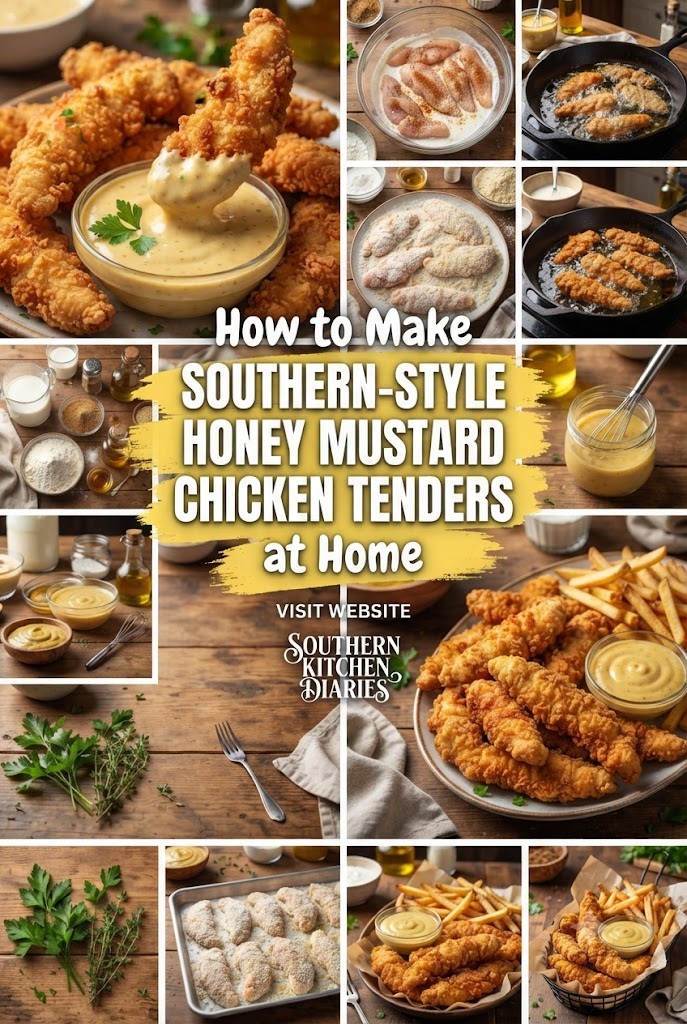
There is a specific kind of magic that happens when a piece of poultry is marinated in seasoned buttermilk, dredged in a spice-heavy flour, fried to a golden mahogany, and dipped into a pool of creamy, tangy honey mustard. In the American South, chicken tenders aren’t just a “kids’ menu” staple; they are a culinary art form. They represent the intersection of comfort, hospitality, and a relentless pursuit of the perfect crunch.
Making restaurant-quality Southern-style honey mustard chicken tenders at home requires more than just a deep fryer. It requires an understanding of texture, temperature, and the delicate balance of flavors. In this comprehensive guide, we are going to break down every single element—from the anatomy of the chicken strip to the chemistry of the honey mustard sauce—to ensure you can recreate this iconic dish in your own kitchen.
The Anatomy of the Perfect Chicken Tender
Before we heat the oil, we must understand our primary ingredient. A common mistake home cooks make is using “chicken strips” interchangeably with “chicken tenders.”
Tenders vs. Breasts
The “tenderloin” is a specific muscle located beneath the breast meat. It is naturally more succulent and tender than the rest of the bird. While you can certainly slice a chicken breast into strips, true Southern tenders utilize the actual tenderloin. If you are using breast meat, it is vital to slice against the grain to ensure the meat doesn’t become “stringy” or tough after frying.
The Importance of the Tendon
Every chicken tenderloin contains a white, tough tendon running through the top. For a professional result, you should remove this. You can do this by placing the tendon between the tines of a fork and pulling it out with a paper towel for grip. This small step elevates the eating experience from “homemade” to “gourmet.”
The Secret is in the Soak: The Buttermilk Brine
If you ask any Southern grandmother the secret to her fried chicken, she will point to the buttermilk carton. Buttermilk serves a dual purpose: the lactic acid gently breaks down the proteins in the meat, ensuring it stays juicy, while its thickness helps the flour coating adhere to the chicken.
Creating the Flavor Base
A plain buttermilk soak is good, but a seasoned soak is better. To your buttermilk, you should add:
- Hot Sauce: A vinegar-based sauce like Crystal or Texas Pete adds a subtle tang and heat that penetrates the meat without making it “spicy.”
- Pickle Juice: A secret weapon in many Southern kitchens, pickle juice provides acidity and salt that brines the chicken from the inside out.
- Dried Herbs: Oregano and thyme infuse the meat with an earthy undertone.
Timing the Marination
You should aim to marinate your tenders for at least 4 hours, though overnight is ideal. This gives the enzymes enough time to tenderize the meat. However, avoid marinating for longer than 24 hours, as the acidity can eventually turn the texture of the chicken mushy.
The Science of the Crunch: The Breading Process
The hallmark of a great Southern chicken tender is a craggy, flaky, and ultra-crispy exterior. Achieving this requires a specific technique often referred to as the “Double Dredge.”
The Flour Mixture
All-purpose flour is the standard, but for extra crunch, many professionals mix in a bit of cornstarch or potato starch. These starches have a higher amylose content than flour, which creates a crispier, more rigid structure when fried.
The Spice Profile: Don’t be shy with the seasonings. The flour should be heavily seasoned with:
- Smoked Paprika: For color and a hint of woodsmoke flavor.
- Garlic and Onion Powder: The savory backbone of the breading.
- Cayenne Pepper: To provide a back-of-the-throat warmth.
- Freshly Ground Black Pepper: Essential for that classic Southern “peppery” bite.
- Kosher Salt: To enhance every other flavor in the mix.
Creating the “Nooks and Crannies”
Here is a professional tip: before you put your chicken in the flour, drizzle a few tablespoons of your buttermilk marinade into the flour and toss it with a fork. This creates small clumps of dough. When you dredge the chicken, these clumps stick to the surface, creating those jagged, extra-crispy bits that everyone loves.
The Golden Standard: Frying Technique
Frying can be intimidating, but it is manageable when you focus on temperature and oil choice.
Choosing Your Oil
You need an oil with a high smoke point and a neutral flavor. Peanut oil is the gold standard for Southern frying because it can withstand high heat and contributes a very faint, pleasant nuttiness. If you have an allergy, Canola oil or Vegetable oil are excellent alternatives. Avoid olive oil or butter, as they will burn long before the chicken is cooked.
The Temperature Zone
The ideal temperature for frying chicken tenders is 350°F (175°C).
- If the oil is too cold, the breading will absorb the fat and become greasy.
- If the oil is too hot, the outside will burn before the inside is cooked through.
Use a clip-on deep-fry thermometer to monitor the temperature. Remember that when you add cold chicken to the hot oil, the temperature will drop. Adjust your burner accordingly to keep it steady.
Don’t Crowd the Pan
Fry in batches. If you put too many tenders in the pot at once, the oil temperature will plummet, and the tenders will stick together. Give them room to “swim.”
The Star of the Show: Homemade Honey Mustard Sauce
While you can buy honey mustard at the store, nothing compares to the fresh, vibrant flavor of a homemade version. The perfect honey mustard should be a balance of three elements: Creamy, Tangy, and Sweet.
The Components
- The Base: Mayonnaise provides the creamy mouthfeel. High-quality, egg-heavy mayo is best.
- The Mustards: Use a combination. Yellow mustard gives that classic Americana tang and bright color, while Dijon mustard adds a sophisticated spicy kick.
- The Sweetener: Use a floral, local honey if possible. It provides the sweetness that balances the acidity.
- The Acid: A teaspoon of Apple Cider Vinegar or Lemon Juice brightens the whole sauce.
- The Secret Ingredient: A pinch of smoked paprika or a tiny bit of garlic powder can add depth to the sauce that makes people wonder what your secret is.
Emulsifying the Sauce
Whisk the ingredients together until completely smooth. For the best flavor, let the sauce sit in the refrigerator for at least 30 minutes before serving. This allows the sharp flavors of the mustard to mellow and meld with the honey.
Step-by-Step Recipe: Southern-Style Honey Mustard Chicken Tenders
Ingredients
For the Chicken & Marinade:
- 2 lbs Chicken Tenders (tenderloins)
- 2 cups Buttermilk
- 2 tbsp Louisiana-style Hot Sauce
- 1/4 cup Dill Pickle Juice
- 1 tsp Garlic Powder
- 1 tsp Salt
For the Breading:
- 3 cups All-Purpose Flour
- 1/2 cup Cornstarch
- 2 tbsp Smoked Paprika
- 1 tbsp Garlic Powder
- 1 tbsp Onion Powder
- 1 tsp Cayenne Pepper (adjust to taste)
- 2 tsp Black Pepper
- 1 tbsp Kosher Salt
For the Honey Mustard Sauce:
- 1/2 cup Mayonnaise
- 2 tbsp Dijon Mustard
- 2 tbsp Yellow Mustard
- 1/4 cup Honey
- 1 tsp Apple Cider Vinegar
- 1/4 tsp Garlic Powder
- A pinch of Salt and Pepper
For Frying:
- 1 quart Peanut Oil (or enough to fill your pot 2 inches deep)
Instructions
- The Marinade: In a large bowl, whisk together the buttermilk, hot sauce, pickle juice, garlic powder, and salt. Add the chicken tenders, ensuring they are fully submerged. Cover and refrigerate for 4 to 12 hours.
- The Sauce: In a small bowl, whisk together the mayonnaise, both mustards, honey, vinegar, and spices. Taste and adjust the honey or mustard to your preference. Cover and chill.
- The Flour Mix: In a large, shallow dish, whisk together the flour, cornstarch, and all the spices.
- The Dredge: Take a tender from the buttermilk, let the excess drip off, and coat it thoroughly in the flour mixture. Press the flour into the meat to ensure a thick coating. For a “Super Crunch,” dip it back into the buttermilk and then back into the flour (Double Dredge).
- The Rest: Place the coated tenders on a wire rack for about 10–15 minutes before frying. This “sets” the breading and prevents it from falling off in the oil.
- The Fry: Heat your oil in a heavy-bottomed Dutch oven or cast-iron skillet to 350°F. Fry the tenders in batches for 4–6 minutes, turning once, until they are golden brown and reach an internal temperature of 165°F.
- The Drain: Remove the chicken and place it on a clean wire rack set over a baking sheet. Do not drain on paper towels, as this can trap steam and make the bottom of the tenders soggy.
- The Serve: Serve immediately with a generous side of the chilled honey mustard sauce.
Modern Twists: Air Fryer and Baked Versions
If you are looking to save on calories without sacrificing too much flavor, you can adapt this recipe for the oven or air fryer.
The Air Fryer Method
Preheat your air fryer to 400°F. Spray the air fryer basket liberally with oil. Place the breaded tenders in a single layer (do not overlap). Spray the tops of the tenders with oil—this is crucial for getting them brown. Cook for 6 minutes, flip, spray again, and cook for another 5–6 minutes until crispy.
The Baked Method
Preheat your oven to 425°F. Place a wire rack over a baking sheet. Follow the breading instructions, but for the best color, toast your flour in a pan for a few minutes before breading, or use Panko breadcrumbs. Bake for 15–20 minutes until the internal temperature hits 165°F.
Perfect Side Dish Pairings
To make this a true Southern feast, you need the right sides.
1. Creamy Coleslaw
The cool, crunchy texture of cabbage in a vinegar-mayo dressing provides the perfect contrast to the hot, salty fried chicken.
2. Flaky Buttermilk Biscuits
In the South, biscuits are a requirement. Use the leftover buttermilk to whip up a batch of tall, flaky biscuits. Use them to make mini chicken sliders with the honey mustard sauce.
3. Macaroni and Cheese
A stovetop or baked mac and cheese with a sharp cheddar base complements the sweetness of the honey mustard sauce beautifully.
4. Seasoned Fries or Potato Wedges
Double-fried potatoes or “jojo” wedges are the classic pairing. Season them with the same spice mix used for the chicken flour for flavor consistency.
Troubleshooting Common Issues
Why is my breading falling off?
This usually happens for three reasons:
- The chicken was too wet when it went into the flour (ensure you drip off the excess buttermilk).
- The oil wasn’t hot enough (the breading didn’t “set” instantly).
- You didn’t let the breaded chicken rest before frying (resting allows the flour to hydrate and stick to the meat).
Why is the chicken dry inside?
You likely overcooked it. Chicken tenders are small and cook very fast. Once they reach 165°F, pull them out. Even 30 seconds too long can dry out a tenderloin.
Why is the breading dark but the meat is raw?
Your oil is too hot. If the oil is at 400°F, the outside will burn before the heat can penetrate to the center of the meat. Keep a thermometer handy!
Storage and Reheating Tips
Fried chicken is always best fresh, but if you have leftovers, you can keep them crispy.
- Storage: Store in an airtight container in the refrigerator for up to 3 days.
- Reheating: Never use the microwave; it will make the breading rubbery and soggy. Instead, use an oven or air fryer. Reheat at 375°F for about 5–8 minutes until the skin sizzles again.
- Freezing: You can freeze fried tenders. Place them on a cookie sheet to freeze individually, then transfer to a freezer bag. Reheat directly from frozen in a 400°F oven for 15 minutes.
The Cultural Significance of the Chicken Tender
The chicken tender occupies a unique space in American culinary history. While fried chicken has deep roots in Scottish and West African traditions that merged in the American South, the “tender” as we know it gained massive popularity in the late 20th century. It became the ultimate “diplomat food”—something nearly everyone enjoys, from toddlers to food critics.
By making them at home, you are participating in a tradition of “slow fast food.” It takes time to brine, dredge, and fry, but the result is a level of quality that no drive-thru can ever match. The honey mustard sauce, with its roots in European mustard traditions and American honey production, provides the perfect “soulmate” to the savory chicken.
Final Thoughts for the Home Chef
Mastering Southern-style honey mustard chicken tenders is a rite of passage for any home cook who loves comfort food. It’s a dish that relies on technique rather than expensive ingredients. It teaches you about the importance of seasoning every layer—the meat, the liquid, and the crust.
When you pull that first batch of deep-golden tenders out of the oil and hear that distinctive “crunch” as you bite into one, you’ll realize why this dish has remained a cornerstone of Southern cooking for generations. Serve them hot, keep the honey mustard flowing, and enjoy the best version of a classic you’ve ever had.
