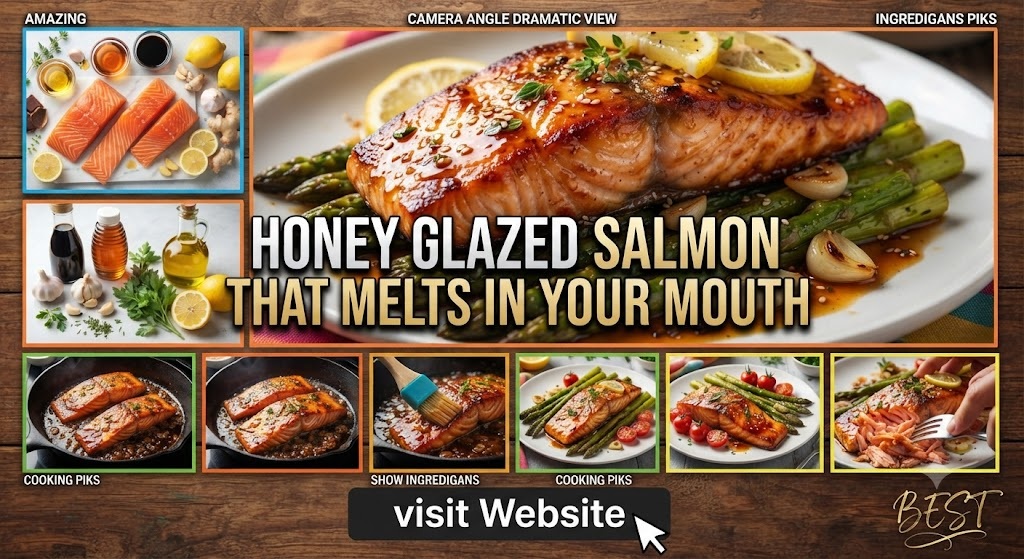
In the high-pressure environment of a professional kitchen, we often look for the “triple threat” of recipes: a dish that is visually stunning, nutritionally dense, and remarkably fast to execute. Honey glazed salmon is that rare unicorn of the culinary world. It’s a dish that commands respect at a dinner party but requires less time than a round trip to a fast-food drive-thru.
Honey Glazed Salmon Made Easy – Sweet, Sticky & Ready in 30 Minutes
🍯 Honey Glazed Salmon Made Easy (Restaurant-Quality at Home)
This Honey Glazed Salmon is perfectly flaky, juicy, and coated in a rich honey garlic glaze that’s sweet, savory, and packed with flavor. It’s a quick and healthy dinner recipe that comes together in just 30 minutes, making it ideal for busy weeknights or elegant family dinners.
⏱ Recipe Information
- Prep Time: 10 minutes
- Cook Time: 15-18 minutes
- Total Time: 25-30 minutes
- Servings: 4
- Cuisine: American
- Course: Main Course
- Difficulty: Easy
- Calories: Approximately 420 per serving
🛒 Ingredients
For the Salmon
- 4 salmon fillets (6 oz each)
- 2 tablespoons olive oil
- 1 teaspoon salt
- ½ teaspoon black pepper
- ½ teaspoon paprika
For the Honey Garlic Glaze
- ¼ cup honey
- 2 tablespoons soy sauce
- 3 cloves garlic, minced
- 1 tablespoon fresh lemon juice
- 1 tablespoon Dijon mustard
- 1 teaspoon grated fresh ginger (optional)
- 1 tablespoon butter
Garnish
- Fresh parsley, chopped
- Lemon slices
- Sesame seeds (optional)
👨🍳 How to Make Honey Glazed Salmon
Step 1: Prepare the Salmon
Pat the salmon fillets dry using paper towels.
Season both sides with:
- Salt
- Black pepper
- Paprika
Allow the salmon to sit for about 10 minutes while preparing the glaze.
Step 2: Make the Honey Glaze
In a small bowl combine:
- Honey
- Soy sauce
- Garlic
- Lemon juice
- Dijon mustard
- Ginger (optional)
Whisk until smooth.
Step 3: Sear the Salmon
Heat olive oil in a large skillet over medium-high heat.
Place salmon skin-side down.
Cook for 4-5 minutes.
Carefully flip and cook another 2-3 minutes.
Remove salmon and set aside.
Step 4: Cook the Glaze
Reduce heat to medium.
Add butter to the same skillet.
Pour in the honey mixture.
Cook for 2-3 minutes, stirring constantly until the glaze thickens.
Step 5: Glaze the Salmon
Return the salmon to the skillet.
Spoon the glaze over each fillet.
Cook for another 2 minutes, allowing the salmon to absorb the sauce.
Step 6: Garnish & Serve
Top with:
- Fresh parsley
- Sesame seeds
- Lemon slices
Serve immediately.
🍽 Best Side Dishes
This salmon pairs perfectly with:
- Garlic mashed potatoes
- Steamed broccoli
- Roasted asparagus
- Rice pilaf
- Buttered green beans
- Quinoa
- Garden salad
- Roasted vegetables
💡 Pro Tips
- Choose fresh salmon with bright color and firm texture.
- Pat the salmon dry before seasoning for a better sear.
- Don’t overcook the fish—it should flake easily with a fork.
- Cook the glaze over medium heat to prevent the honey from burning.
- Spoon the glaze over the salmon several times while finishing for extra flavor.
- Fresh lemon juice gives the best taste compared to bottled juice.
🔄 Recipe Variations
Spicy Honey Salmon
Add:
- 1 teaspoon sriracha
- ½ teaspoon red pepper flakes
Maple Honey Salmon
Replace half the honey with pure maple syrup.
Asian Style
Add:
- 1 teaspoon sesame oil
- Extra ginger
- Green onions
- Sesame seeds
Citrus Honey Salmon
Use fresh orange juice instead of lemon juice for a sweeter glaze.
🥡 Storage
Store leftovers in an airtight container in the refrigerator for up to 3 days.
❄ Freezing
Freeze cooked salmon for up to 2 months.
Thaw overnight in the refrigerator before reheating.
🔥 Reheating
- Oven: 300°F (150°C) for 10 minutes
- Air Fryer: 350°F for 4-5 minutes
- Microwave: Heat in 30-second intervals until warmed through
🥗 Nutrition (Per Serving)
- Calories: 420
- Protein: 36g
- Carbohydrates: 15g
- Fat: 24g
- Saturated Fat: 5g
- Fiber: 0g
- Sugar: 13g
- Sodium: 520mg
❓ Frequently Asked Questions
Can I use frozen salmon?
Yes. Thaw it completely and pat it dry before cooking.
Can I bake instead of pan-searing?
Yes. Bake at 400°F (200°C) for 12–15 minutes, then brush with the honey glaze during the last few minutes of baking.
What type of salmon works best?
Atlantic, Sockeye, Coho, or King salmon all work well.
Can I make the glaze ahead?
Absolutely. Store it in the refrigerator for up to 3 days and stir before using.
❤️ Why You’ll Love This Recipe
- Ready in under 30 minutes
- Sweet, savory, and perfectly balanced flavors
- Tender, flaky salmon with a glossy honey garlic glaze
- Healthy, high in protein, and rich in omega-3s
- Perfect for weeknight dinners or special occasions
- Beginner-friendly with simple ingredients
The Anatomy of the Perfect Sear
Before we even touch a bottle of honey, we have to talk about the fish. To the uninitiated, cooking salmon seems daunting. It’s a delicate protein that can turn from “perfectly translucent” to “overcooked rubber” in a matter of seconds. However, once you understand the physics of the sear, the fear disappears.
The secret to honey glazed salmon isn’t just the glaze; it’s the contrast. You want a high-heat sear on the exterior to lock in the fats, followed by a gentle finish in the glaze to infuse flavor. We aren’t just boiling the fish in sugar; we are lacquer-coating it. Think of the glaze as a finishing touch, a liquid gold that clings to the ridges of the perfectly cooked muscle fibers.
Sourcing Your Seafood: What to Buy
As a chef, I’ll tell you that 70% of the work is done at the fish counter. If you start with inferior fish, no amount of honey will save the dish.
- King (Chinook) Salmon: The “Wagyu” of the sea. It has the highest fat content and a buttery texture. If you’re celebrating, this is your choice.
- Sockeye Salmon: Known for its deep red color and intense, “fishier” (in a good way) flavor. It’s leaner, so you must be careful not to overcook it.
- Atlantic Salmon: This is the most common variety found in grocery stores. It’s generally farmed, which gives it a consistent fat content and a milder flavor. It’s perfect for honey glazes because it absorbs the sweetness beautifully.
- Fresh vs. Frozen: Don’t be afraid of the freezer aisle. Most “fresh” fish at the counter was previously frozen anyway. “Flash-frozen at sea” often preserves the cellular structure better than fish that has been sitting in a display case for three days.
The Master Grocery List
To create this dish, you don’t need an exotic pantry. You need quality staples.
- The Salmon: Four 6-ounce fillets. I prefer skin-on for the structural integrity it provides during cooking.
- The Honey: Use a raw, local clover or wildflower honey. Avoid the ultra-processed “bear bottle” honey if possible; it lacks the floral depth needed to balance the fat of the salmon.
- The Acid: Fresh lemon juice is non-negotiable. The citric acid cuts through the sugar and the fat.
- The Umami: Low-sodium soy sauce or tamari. This provides the salt and the deep color.
- The Aromatics: Fresh garlic (grated, not chopped) and freshly grated ginger. The ginger provides a subtle heat that wakes up the palate.
- The Fat: A high-smoke-point oil like avocado oil or grapeseed oil for the sear, and a tablespoon of cold unsalted butter to finish the sauce.
- The Garnish: Green onions (scallions) and toasted sesame seeds for texture and a pop of color.
Essential Kitchen Gear
You don’t need a kitchen full of gadgets, but two items are vital:
- A Heavy-Bottomed Skillet: Cast iron is my favorite for salmon because it holds heat exceptionally well, ensuring a consistent sear. A high-quality stainless steel pan also works, but avoid thin non-stick pans if you want a truly professional crust.
- A Fish Spatula: These are thin, flexible, and slotted. They allow you to get under the delicate skin without tearing it.
The Step-by-Step Culinary Process
Follow these steps exactly, and you will produce a dish that looks like it cost $45 at a downtown bistro.
Phase 1: The Prep (Mise en Place)
Remove your salmon from the refrigerator at least 15–20 minutes before cooking. Cold fish hitting a hot pan causes the muscle fibers to seize, resulting in a tough texture. Pat the fillets bone-dry with paper towels. I cannot stress this enough: Moisture is the enemy of the sear. If the fish is wet, it will steam instead of crusting.
Phase 2: The Glaze Construction
In a small bowl, whisk together 1/3 cup of honey, 2 tablespoons of soy sauce, 1 tablespoon of lemon juice, 2 cloves of grated garlic, and 1 teaspoon of grated ginger. Do not add the butter yet.
Phase 3: The Sear
Place your skillet over medium-high heat. Add two tablespoons of your high-smoke-point oil. Once the oil is shimmering (almost smoking), seasoned only the flesh side of the salmon with a pinch of kosher salt and cracked black pepper.
Place the salmon in the pan, flesh-side down first. Press down gently with your spatula for 10 seconds to ensure even contact. Let it sear undisturbed for about 3–4 minutes. You’ll see the color change creeping up the sides of the fillet.
Phase 4: The Flip and the Glaze
Flip the fillets carefully to the skin side. Now, pour the honey mixture directly into the pan. The liquid will immediately begin to bubble and reduce. This is where the magic happens.
As the glaze reduces, use a spoon to continuously baste the top of the salmon. This is a French technique called arrosé. You are essentially coating the fish in a hot, reducing syrup.
Phase 5: The Finish
In the last 60 seconds of cooking, drop a tablespoon of cold butter into the sauce. Swirl the pan. The butter will emulsify with the honey and soy, creating a glossy, velvet-like sauce. Remove the pan from the heat when the salmon reaches an internal temperature of 130°F to 135°F for a perfect medium.
Pro-Level Secrets for Crispy Skin
If you love salmon skin (and you should—it’s full of Omega-3s and flavor), the key is starting the fish skin-side down in a cold pan and gradually raising the heat, or using the high-heat method mentioned above but ensuring the skin is ultra-dry. For this honey-glazed version, I find searing the flesh first creates a better presentation, but if you want that “cracker-like” skin, cook it 80% of the way on the skin side, then flip just to glaze.
Navigating Common Pitfalls
Even professionals make mistakes. Here’s how to avoid the most common ones:
- The Glaze is Burning: Honey has a high sugar content. If the pan is too hot, the glaze will turn bitter and black. If you see it darkening too quickly, pull the pan off the heat immediately and add a splash of water or more lemon juice to lower the temperature.
- The Fish is Sticking: This usually happens because you tried to flip the fish too early. Salmon will “release” itself from the pan once a proper crust has formed. If it’s sticking, give it another 30 seconds.
- White Gunk on the Fish: That white substance is called albumin. It’s a protein that pushes to the surface when the fish is cooked too fast or too long. It’s perfectly safe to eat, but to minimize it, cook the salmon more gently and don’t overcook it.
Flavor Profiles and Global Variations
Once you master the basic honey-soy-lemon glaze, the world is your oyster (or your salmon).
- The Spicy Kick: Add a teaspoon of Sriracha or red chili flakes to the glaze for a “Hot Honey” salmon.
- The Mediterranean Twist: Swap soy sauce for balsamic vinegar and add fresh rosemary or thyme.
- The Citrus Explosion: Use orange juice and orange zest instead of lemon, and add a drop of toasted sesame oil.
- The Bourbon Glaze: Add a splash of Kentucky bourbon to the honey. The alcohol burns off, leaving a smoky, caramel depth that is incredible with the fatty fish.
Pairing the Perfect Sides
A dish this flavorful needs a supporting cast that won’t compete for attention.
- Grains: A bed of jasmine rice is the classic choice to soak up the extra glaze. For a nuttier profile, try quinoa or farro.
- Vegetables: Roasted bok choy or charred broccolini are my top picks. The bitterness of the greens balances the sweetness of the honey perfectly.
- Salads: A cold cucumber salad with rice vinegar and dill provides a refreshing, crunchy contrast to the warm, soft fish.
- Wine: Look for a high-acid white wine. A dry Riesling or a crisp Sauvignon Blanc will cut through the richness of the glaze and the salmon’s fat content.
Managing Leftovers: Storage and Safety
While salmon is best enjoyed fresh from the pan, leftovers can be handled with care.
- Storage: Store in an airtight container in the refrigerator for up to 2 days.
- Repurposing: Cold honey glazed salmon is fantastic flaked over a Caesar salad or tucked into a wrap with avocado and sprouts.
- Reheating: Avoid the microwave at all costs; it will turn the fish into a rubbery mess. Instead, place the salmon in a covered pan with a teaspoon of water over low heat until just warmed through.
Nutrition Information (Per Serving)
Salmon is a nutritional powerhouse. A 6-ounce fillet provides:
- Calories: 350–400 (depending on the amount of glaze used)
- Protein: 34g
- Healthy Fats: 15g (primarily Omega-3 fatty acids)
- Carbohydrates: 12g (mostly from the honey)
Your Burning Questions Answered (FAQ)
Q: Can I use frozen salmon for this recipe? A: Absolutely. Just ensure it is completely thawed and, more importantly, patted dry. Frozen fish tends to release more moisture, so you may need extra paper towels to get that sear.
Q: Is there a substitute for honey? A: Maple syrup is an excellent 1:1 substitute. It offers a different, more earthy sweetness that pairs beautifully with salmon, especially in the autumn months.
Q: Should I leave the skin on or take it off? A: I always recommend leaving it on during cooking. It acts as a heat shield, protecting the delicate flesh from the direct heat of the pan. Even if you don’t plan on eating the skin, it’s easier to peel off after cooking.
Q: How do I know when the salmon is done without a thermometer? A: Use a fork to gently press down on the top of the fillet. If the flakes of the fish begin to separate (this is called “flaking”), it’s done. If it’s firm and won’t budge, it needs more time. If it’s falling apart, it’s overdone.
Q: Can I bake this instead of pan-searing? A: Yes. Preheat your oven to 400°F. Place the salmon on a parchment-lined tray, pour the glaze over it, and bake for 12–15 minutes. You won’t get the same crispy exterior, but the flavor will still be excellent.
Q: My glaze is too thin. How do I thicken it? A: Let it simmer for an extra minute or two in the pan. The water in the lemon juice and soy sauce needs to evaporate, leaving the honey and sugars to caramelize into a syrup.
Q: Can I prep the glaze ahead of time? A: Certainly. The glaze will stay fresh in a jar in the fridge for up to a week. This makes weeknight cooking even faster.
Q: Is this recipe gluten-free? A: If you use Tamari instead of traditional soy sauce, this recipe is 100% gluten-free.
Final Thoughts
Cooking is as much about confidence as it is about ingredients. When you approach a piece of salmon with the right technique—drying the surface, managing the heat, and knowing when to let the glaze do its work—you transition from someone who “makes dinner” to someone who “crafts a meal.”
Honey glazed salmon is a testament to the idea that simple ingredients, treated with respect, can produce extraordinary results. It is a dish that honors the fish, celebrates the sweetness of nature, and satisfies the soul. Put on your apron, get that pan screaming hot, and enjoy the process. You’ve got this, Chef.
